
Career after Computer science engineering
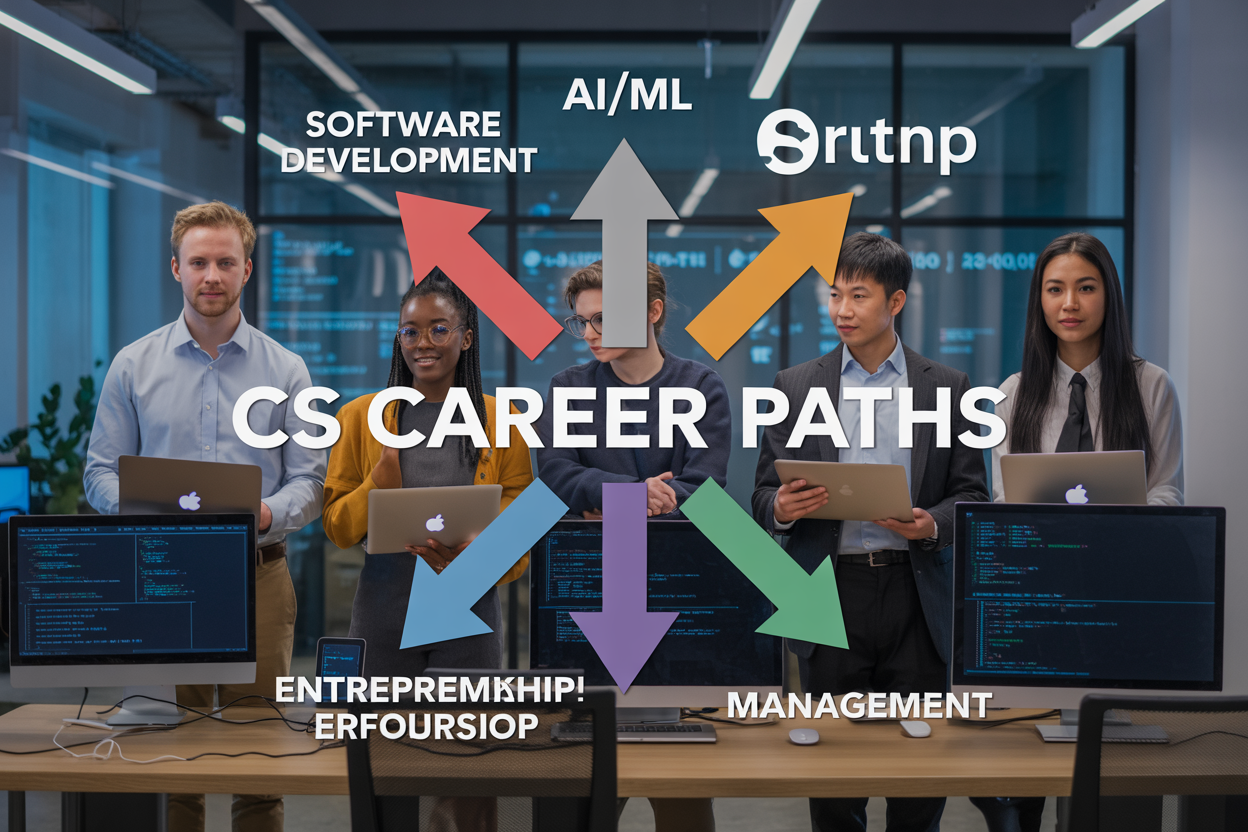
Career After Computer Science Engineering: Your Complete Guide to Tech Opportunities
Computer science engineering graduates have more career options than ever before. This guide is designed for recent CS graduates, current students planning their future, and professionals considering a career change in tech.
The tech industry offers incredible diversity beyond traditional programming roles. We’ll explore traditional software development paths that form the backbone of most tech companies, from junior developer positions to senior architect roles. You’ll also discover emerging technology opportunities in artificial intelligence, cybersecurity, and cloud computing that are reshaping the job market.
Finally, we’ll cover non-technical career transitions that leverage your technical background, including product management, technical sales, and consulting roles that often offer competitive salaries and growth potential.
Whether you’re passionate about coding, interested in cutting-edge tech, or prefer working with people over computers, your CS degree opens doors across multiple industries and career trajectories.
Traditional Software Development Career Paths

Full-Stack Web Developer Opportunities
Full-stack developers handle both the visual parts users see and the behind-the-scenes server work that powers websites and applications. Companies love hiring these versatile professionals because they can jump between different parts of a project without missing a beat.
The demand for full-stack developers continues to grow as businesses want to streamline their development teams. You’ll work with technologies like React or Vue.js for the frontend, Node.js or Python for backend services, and databases like MongoDB or PostgreSQL. Popular tech stacks include MEAN (MongoDB, Express.js, Angular, Node.js) and MERN (MongoDB, Express.js, React, Node.js).
Key responsibilities include:
Building responsive web interfaces that work across all devices
Creating and maintaining APIs that connect different software systems
Managing databases and optimizing performance
Collaborating with designers and product managers
Testing and debugging code across multiple platforms
Salary ranges typically start around $65,000 for entry-level positions and can reach $120,000+ for experienced developers. Remote work opportunities are abundant in this field, making it attractive for those seeking flexible work arrangements.
Mobile Application Development Roles
Mobile app development splits into two main paths: native development for specific platforms (iOS or Android) and cross-platform development using frameworks like React Native or Flutter.
iOS developers primarily use Swift and Xcode to create apps for iPhones and iPads. Android developers work with Kotlin or Java using Android Studio. Cross-platform developers can build apps that work on both systems using a single codebase, which many startups and smaller companies prefer for cost efficiency.
Career specializations include:
Native iOS development with Swift
Android development with Kotlin
Cross-platform development using React Native or Flutter
Mobile game development with Unity or Unreal Engine
Progressive Web App (PWA) development
The mobile market shows no signs of slowing down, with billions of smartphone users worldwide. Entry-level mobile developers earn between $60,000-$80,000, while senior developers can command $130,000 or more. Many developers also create their own apps as side projects, potentially generating passive income through app store sales.
Backend Systems Engineering Positions
Backend engineers build the invisible infrastructure that powers every digital service. They design and maintain the servers, databases, and APIs that handle user requests, process data, and keep applications running smoothly.
This role requires deep understanding of server architecture, database design, and system scalability. You’ll work with cloud platforms like AWS, Google Cloud, or Microsoft Azure to deploy and manage applications that can handle thousands or millions of users simultaneously.
Technical focus areas:
API design and development using REST or GraphQL
Database architecture and optimization
Cloud infrastructure management
Microservices architecture implementation
Performance monitoring and system optimization
Security implementation and data protection
Backend engineers often specialize in specific programming languages like Python, Java, Go, or C#. The role demands strong problem-solving skills since you’re responsible for ensuring systems remain stable under heavy loads.
Compensation reflects the specialized nature of this work, with entry-level positions starting around $70,000 and experienced engineers earning $140,000+. Many backend engineers eventually transition into DevOps or site reliability engineering roles.
Frontend User Interface Specialist Jobs
Frontend specialists focus exclusively on creating exceptional user experiences through intuitive interfaces and smooth interactions. This role combines technical programming skills with design sensibility and user psychology understanding.
Modern frontend development goes far beyond basic HTML and CSS. You’ll work with sophisticated JavaScript frameworks, state management libraries, and build tools that create complex, interactive web applications. Performance optimization becomes critical as you ensure fast loading times and smooth animations across different devices and browsers.
Core competencies include:
Advanced JavaScript and modern framework expertise (React, Vue.js, Angular)
CSS preprocessing and modern styling approaches
Responsive design and mobile-first development
Web performance optimization techniques
Accessibility standards implementation
User experience testing and iteration
Frontend specialists often collaborate closely with UX/UI designers, translating design mockups into functional code while suggesting improvements based on technical constraints or opportunities. Many also work with marketing teams to implement A/B tests and conversion optimization strategies.
Career progression can lead to senior frontend architect roles or specialization in emerging areas like WebAssembly or WebGL for high-performance web applications. Salaries range from $60,000 for junior positions to $125,000+ for senior specialists, with additional opportunities for freelance and contract work.
Emerging Technology Career Opportunities

Artificial Intelligence and Machine Learning Engineer
The AI and ML field offers some of the most exciting career prospects for computer science graduates today. Machine learning engineers design and implement algorithms that enable computers to learn and make decisions without explicit programming. You’ll work with neural networks, deep learning frameworks like TensorFlow and PyTorch, and handle massive datasets to train intelligent systems.
Companies across every industry need AI specialists to automate processes, predict customer behavior, and create innovative products. Tech giants like Google, Amazon, and Microsoft actively recruit ML engineers, while startups focus on niche AI applications. The average salary ranges from $120,000 to $200,000+ annually, with senior positions commanding even higher compensation.
Essential skills include Python programming, statistics, linear algebra, and experience with cloud platforms. Many professionals transition into specialized areas like natural language processing, computer vision, or reinforcement learning based on their interests and market demand.
Cloud Computing and DevOps Specialist
Cloud computing has revolutionized how businesses operate, creating massive demand for specialists who can design, implement, and manage cloud infrastructure. DevOps engineers bridge the gap between development and operations teams, automating deployment processes and ensuring smooth software delivery.
Major cloud platforms include AWS, Microsoft Azure, and Google Cloud Platform. Professionals in this space work with containerization tools like Docker and Kubernetes, infrastructure as code using Terraform, and continuous integration/continuous deployment (CI/CD) pipelines. The role requires understanding both technical implementation and business requirements.
| Platform | Market Share | Key Services |
|---|---|---|
| AWS | 33% | EC2, S3, Lambda |
| Microsoft Azure | 22% | Virtual Machines, Blob Storage |
| Google Cloud | 10% | Compute Engine, BigQuery |
Career paths range from cloud architects earning $150,000+ to DevOps engineers starting around $90,000. Certifications from cloud providers significantly boost earning potential and job prospects.
Cybersecurity Analyst and Ethical Hacker
With cyber threats growing more sophisticated daily, cybersecurity professionals are in critical demand. Security analysts protect organizations from data breaches, malware, and other cyber attacks by monitoring networks, analyzing threats, and implementing protective measures.
Ethical hackers, also known as penetration testers, use the same techniques as malicious hackers to identify vulnerabilities before criminals exploit them. They conduct authorized attacks on systems, write detailed reports about security weaknesses, and recommend improvements.
Key responsibilities include:
Monitoring security events and incident response
Conducting vulnerability assessments
Implementing security policies and procedures
Performing forensic analysis after security incidents
Testing new security technologies
The field offers diverse specializations like network security, application security, and digital forensics. Entry-level positions start around $70,000, while experienced professionals earn $120,000+. Certifications like CISSP, CEH, and CompTIA Security+ are highly valued by employers.
Data Science and Analytics Professional
Data science combines programming, statistics, and domain expertise to extract insights from complex datasets. Data scientists help organizations make informed decisions by analyzing customer behavior, market trends, and operational efficiency.
The role involves collecting and cleaning data, building predictive models, and communicating findings to stakeholders. You’ll use tools like Python, R, SQL, and visualization platforms such as Tableau or Power BI. Machine learning knowledge helps create sophisticated predictive models.
Common applications include:
Customer segmentation and recommendation systems
Fraud detection and risk assessment
Supply chain optimization
Marketing campaign effectiveness
Financial forecasting
Different industries offer unique opportunities. Healthcare data scientists work with patient records and clinical trials, while e-commerce analysts focus on user behavior and conversion optimization. Financial services need risk analysts and algorithmic trading specialists.
Career progression typically moves from data analyst ($60,000-$80,000) to data scientist ($100,000-$140,000) to senior data scientist or analytics manager ($150,000+).
Blockchain Developer and Cryptocurrency Expert
Blockchain technology extends far beyond cryptocurrency, offering opportunities in supply chain management, digital identity verification, smart contracts, and decentralized applications (DApps). Blockchain developers create and maintain distributed ledger systems that ensure transparency and security without central authority.
Smart contract development requires proficiency in languages like Solidity for Ethereum or Rust for newer platforms. You’ll design decentralized applications, implement consensus mechanisms, and ensure blockchain network security.
Career opportunities exist in:
Cryptocurrency exchanges and wallets
DeFi (Decentralized Finance) protocols
NFT marketplaces and gaming platforms
Enterprise blockchain solutions
Government and regulatory technology
The field moves rapidly, requiring continuous learning about new protocols, consensus mechanisms, and regulatory changes. Salaries range from $90,000 for junior developers to $180,000+ for blockchain architects. Many professionals also participate in blockchain projects as freelancers or consultants, offering flexibility and potentially higher earnings.
Non-Technical Career Transitions for CS Graduates
Technical Product Management Roles
Computer science graduates bring a unique advantage to product management by bridging the gap between technical feasibility and market demand. Technical product managers translate complex engineering concepts into business value while guiding development teams through strategic product decisions.
The role involves defining product roadmaps, gathering customer requirements, and working closely with engineering teams to prioritize features. Your technical background helps you evaluate implementation complexity, estimate development timelines accurately, and make informed trade-offs between technical debt and new features.
Major tech companies like Google, Microsoft, Amazon, and Meta actively recruit CS graduates for these positions. Entry-level technical product manager salaries typically range from $120,000 to $180,000, with total compensation reaching $200,000+ including stock options and bonuses.
Key responsibilities include:
Conducting market research and competitive analysis
Creating detailed product specifications and user stories
Collaborating with designers, engineers, and stakeholders
Analyzing product metrics and user feedback
Managing product launches and go-to-market strategies
Success in this field requires developing strong communication skills, business acumen, and customer empathy while maintaining your technical edge.
IT Consulting and Business Analysis
The consulting world offers lucrative opportunities for CS graduates who enjoy problem-solving across diverse industries. Business analysts with technical backgrounds help organizations optimize their technology investments and digital transformation initiatives.
IT consultants work with clients to assess existing systems, identify inefficiencies, and recommend solutions that align with business objectives. Your programming knowledge enables you to evaluate software architectures, database designs, and integration challenges that non-technical consultants might overlook.
Top consulting firms like McKinsey Digital, Deloitte, Accenture, and PwC value candidates who can speak both business and technical languages fluently. These roles often involve travel and client interaction, making them perfect for those seeking variety in their work environment.
Common consulting specializations include:
| Specialization | Focus Area | Avg. Salary Range |
|---|---|---|
| Digital Transformation | Process automation, cloud migration | $90K – $150K |
| Data Analytics | Business intelligence, reporting | $85K – $140K |
| Cybersecurity | Risk assessment, compliance | $95K – $160K |
| ERP Implementation | System integration, workflow design | $80K – $135K |
Business analysts gather requirements from stakeholders, document current state processes, and design future state solutions. You’ll create detailed functional specifications, wireframes, and process flows while ensuring technical feasibility.
Technical Sales and Account Management
Sales roles in tech companies offer some of the highest earning potential for CS graduates, especially those comfortable with client-facing responsibilities. Technical sales representatives combine product expertise with relationship-building skills to drive revenue growth.
Software companies need sales professionals who understand their products deeply enough to demonstrate value propositions convincingly. Your technical background allows you to conduct compelling product demos, answer complex technical questions, and build credibility with engineering teams at prospect companies.
Enterprise software sales roles often include base salaries plus commission structures that can double or triple your total compensation. Top performers at companies like Salesforce, Oracle, or ServiceNow regularly earn $300,000+ annually.
Sales career progression typically follows this path:
Sales Development Representative (SDR): $50K – $80K base
Account Executive: $80K – $120K base + commission
Senior Account Executive: $100K – $150K base + commission
Sales Manager: $120K – $180K base + team bonuses
Technical account managers focus on post-sale relationships, ensuring customer success and identifying expansion opportunities. This role combines technical support with strategic planning, helping clients maximize their software investments while uncovering upselling opportunities.
The position requires strong presentation skills, active listening abilities, and patience to guide prospects through complex buying decisions. You’ll spend time understanding customer pain points, mapping technical requirements, and crafting customized solutions that address specific business challenges.
Entrepreneurship and Startup Opportunities

Building Your Own Tech Startup
Computer science graduates have a unique advantage when launching tech startups – they can build their own products instead of relying solely on technical co-founders. The startup landscape offers countless opportunities, from developing mobile apps to creating complex enterprise solutions.
Starting with a minimal viable product (MVP) approach helps validate ideas quickly without massive upfront investment. Many successful startups began in dorm rooms or garages with nothing more than a laptop and determination. Consider focusing on problems you’ve personally experienced or observed in your coursework, internships, or daily life.
Key areas showing strong startup potential include:
Artificial Intelligence and Machine Learning applications
Fintech solutions for underserved markets
Healthcare technology and telemedicine platforms
EdTech tools for remote learning
Sustainability and GreenTech applications
Gaming and interactive entertainment
Funding options range from bootstrapping and crowdfunding to angel investors and venture capital. Many CS graduates start with freelance work or consulting to fund their startup dreams. The technical skills you possess make it possible to build sophisticated prototypes that impress potential investors.
Network within the startup ecosystem through tech meetups, hackathons, and incubator programs. These connections often prove more valuable than initial funding, providing mentorship, partnerships, and early customer acquisition opportunities.
Freelancing and Independent Consulting
Freelancing offers immediate income generation while providing flexibility to work on diverse projects. CS graduates can command premium rates for specialized skills, especially in emerging technologies like blockchain, machine learning, or cloud architecture.
Popular freelancing platforms include Upwork, Freelancer, Toptal, and specialized tech platforms like Gun.io. Building a strong profile with portfolio pieces and client testimonials creates momentum for securing higher-paying projects.
High-demand freelancing areas:
Web and Mobile Development – Always in demand across industries
Data Analysis and Visualization – Growing need for data-driven insights
DevOps and Cloud Migration – Companies moving to cloud infrastructure
Cybersecurity Consulting – Critical need for security expertise
API Development and Integration – Connecting different software systems
Automation and Process Optimization – Helping businesses improve efficiency
Independent consulting requires developing business skills beyond technical expertise. Understanding client needs, project management, and effective communication become equally important. Many successful consultants specialize in specific industries like healthcare, finance, or e-commerce, developing deep domain knowledge alongside technical skills.
Building long-term client relationships often leads to retainer agreements and referrals, creating stable income streams. Some consultants eventually transition these relationships into product opportunities or startup ideas.
Creating Software as a Service Products
SaaS represents one of the most scalable business models for CS graduates. Unlike traditional software sales, SaaS generates recurring revenue through subscription models, creating predictable cash flow and higher business valuations.
Successful SaaS products typically solve specific pain points for defined customer segments. Research shows that B2B SaaS products targeting niche markets often achieve faster growth and higher profit margins than broad consumer applications.
SaaS Development Considerations:
| Aspect | Key Focus Areas |
|---|---|
| Market Research | Identify underserved niches, analyze competitor pricing |
| Technical Architecture | Scalable cloud infrastructure, security, API design |
| User Experience | Intuitive interfaces, onboarding flows, customer support |
| Business Model | Pricing tiers, free trials, customer acquisition costs |
| Marketing Strategy | Content marketing, SEO, partnership channels |
Popular SaaS categories for new entrepreneurs include project management tools, customer relationship management, marketing automation, and vertical-specific solutions for industries like real estate, legal, or healthcare.
The subscription model provides valuable customer feedback loops, enabling continuous product improvement based on usage data and user feedback. Many SaaS founders start with simple products and expand functionality based on customer requests, creating natural product-market fit.
Technical Content Creation and Education
The massive demand for tech education creates opportunities for CS graduates to monetize their knowledge through various content formats. Online learning markets continue growing as professionals seek to upskill and career changers enter tech fields.
Content Creation Opportunities:
Online Course Platforms – Udemy, Coursera, Teachable for structured learning
YouTube Channels – Programming tutorials, tech reviews, career advice
Technical Blogging – Medium, Dev.to, or personal websites for thought leadership
Podcast Hosting – Tech interviews, industry discussions, career guidance
Live Streaming – Twitch, YouTube Live for coding sessions and tutorials
Building an audience takes time but offers multiple monetization streams including course sales, sponsorships, affiliate marketing, and consulting opportunities. Many content creators eventually launch their own educational products or coaching services.
Technical writing for companies provides steady income while building expertise. Developer documentation, API guides, and technical marketing content command good rates. Some writers specialize in specific technologies or industries, becoming go-to experts for complex technical communication.
The key to successful content creation lies in choosing topics you’re genuinely passionate about and can explain clearly to others. Authenticity resonates with audiences more than trying to cover every trending technology. Start with platforms where your target audience already spends time, then expand as your following grows.
Industry-Specific Career Applications

Healthcare Technology and Medical Software
Computer science graduates find themselves at the heart of healthcare’s digital transformation. Electronic health records (EHR) systems need skilled developers to create intuitive interfaces that help doctors access patient information quickly while maintaining strict privacy standards. Medical imaging software presents another exciting path – you could work on algorithms that help radiologists spot cancer earlier or develop AI systems that analyze MRIs with incredible precision.
Telemedicine platforms have exploded in demand, creating opportunities for developers who understand both healthcare workflows and real-time communication technologies. Think about building secure video conferencing systems for doctor-patient consultations or mobile apps that monitor chronic conditions remotely. Medical device software requires CS professionals who can write code for pacemakers, insulin pumps, and surgical robots – where your programming skills literally save lives.
Clinical decision support systems represent another growing field where your algorithms can help doctors make better treatment decisions by analyzing vast amounts of medical literature and patient data. Healthcare data analytics roles focus on finding patterns in population health data to prevent disease outbreaks or optimize hospital operations.
Financial Technology and Banking Systems
The financial sector offers some of the most lucrative and technically challenging opportunities for CS graduates. High-frequency trading systems demand experts who can optimize algorithms to execute thousands of trades in microseconds. You might develop risk management platforms that analyze market volatility or create fraud detection systems that protect millions of transactions daily.
Mobile payment solutions represent a massive growth area – from digital wallets to cryptocurrency exchanges. Companies need developers who understand blockchain technology, security protocols, and user experience design. Banking APIs require specialists who can build secure interfaces allowing third-party applications to access financial data safely.
Algorithmic trading platforms need CS professionals who can combine financial knowledge with programming skills to create automated investment strategies. Credit scoring systems use machine learning to assess loan applications, while regulatory compliance software helps banks navigate complex financial regulations. Robo-advisors for personal finance management offer another pathway where you can help everyday people make smarter investment decisions through intuitive interfaces and smart algorithms.
Gaming and Entertainment Industry
Gaming offers creative and technical challenges that attract many CS graduates. Game engine development involves optimizing graphics rendering, physics simulations, and audio processing to create immersive experiences. You could work on next-generation engines that power blockbuster titles or specialize in mobile game optimization for different devices.
Virtual and augmented reality gaming presents cutting-edge opportunities where you develop immersive worlds using spatial computing and 3D graphics. Multiplayer game networking requires expertise in distributed systems to handle thousands of concurrent players without lag. Game AI development focuses on creating intelligent non-player characters that provide challenging and engaging gameplay experiences.
Live streaming platforms need developers who understand video compression, content delivery networks, and real-time chat systems. Esports platforms require specialists in tournament management software, spectator modes, and analytics systems that track player performance. Game analytics roles involve studying player behavior to improve game design and monetization strategies.
The entertainment industry beyond gaming also offers opportunities in streaming services, where you might work on recommendation algorithms or content delivery optimization. Digital animation and special effects studios need technical directors who bridge the gap between artists and technology.
Automotive and Transportation Technology
The automotive industry has transformed into a technology-driven sector where CS graduates play crucial roles. Autonomous vehicle development needs experts in computer vision, sensor fusion, and machine learning to create self-driving cars. You might work on perception systems that help vehicles recognize traffic signs, pedestrians, and other vehicles in real-time.
Electric vehicle software involves developing battery management systems, charging station networks, and energy optimization algorithms. Connected car platforms require specialists in IoT technologies, cybersecurity, and over-the-air update systems. Navigation and mapping services need developers who can process GPS data, traffic patterns, and route optimization algorithms.
Ride-sharing platforms like Uber and Lyft need backend systems that match drivers with passengers efficiently while handling dynamic pricing and real-time tracking. Fleet management software helps companies optimize vehicle routes, maintenance schedules, and fuel consumption through data analysis.
Transportation logistics offers opportunities in supply chain optimization, where algorithms determine the most efficient shipping routes and warehouse locations. Smart city initiatives need developers who can create traffic management systems that reduce congestion and improve public transportation efficiency. Aviation software presents specialized roles in flight management systems, air traffic control, and aircraft maintenance scheduling.
Career Advancement Strategies and Skill Development

Continuous Learning and Certification Programs
Technology evolves at lightning speed, and staying current isn’t just helpful—it’s essential for career survival. The skills you learned in college represent just the foundation of your professional journey.
Online learning platforms like Coursera, edX, and Udemy offer specialized courses in cutting-edge technologies. Cloud certifications from AWS, Azure, and Google Cloud Platform carry significant weight in today’s job market. These credentials often lead to immediate salary bumps and open doors to senior positions.
Professional certifications provide structured learning paths and industry recognition. Consider pursuing certifications in your chosen specialty:
Machine Learning: TensorFlow Developer, AWS Certified Machine Learning
Cybersecurity: CISSP, CEH, CompTIA Security+
Project Management: PMP, Scrum Master, Agile certifications
Data Science: Microsoft Certified Data Scientist, Google Analytics
Bootcamps and intensive programs offer rapid skill acquisition in specific areas. While shorter than traditional education, they focus on practical, job-ready skills that employers value.
Stay updated with industry publications, technical blogs, and podcasts. Subscribe to newsletters from companies like Stack Overflow, GitHub, and tech leaders you admire. Attend virtual conferences and webinars to learn about emerging trends before they become mainstream.
Set aside time each week for learning—even 30 minutes daily adds up to substantial knowledge over time. Create a learning schedule that balances breadth and depth, exploring new technologies while deepening expertise in your core areas.
Building Professional Networks and Industry Connections
Your technical skills might land you interviews, but relationships often determine which opportunities come your way. Building a strong professional network requires genuine engagement and consistent effort.
Start with your immediate circle—classmates, professors, and internship supervisors. These early connections often prove most valuable as your careers progress together. Maintain regular contact through LinkedIn updates, congratulatory messages on achievements, and occasional check-ins.
Attend local tech meetups, user groups, and industry conferences. Many cities host regular gatherings for specific technologies or interests. These events provide natural conversation starters and shared experiences that form lasting professional bonds.
| Networking Activity | Time Investment | Potential Impact |
|---|---|---|
| Local Meetups | 2-3 hours/month | High – Direct connections |
| LinkedIn Engagement | 15 mins/day | Medium – Broad visibility |
| Industry Conferences | 2-3 days/year | High – Quality connections |
| Online Communities | 30 mins/day | Medium – Knowledge sharing |
Join online communities where professionals in your field gather. Platforms like Reddit, Stack Overflow, Discord servers, and Slack communities host active discussions about industry trends and challenges. Contribute helpful answers and insights rather than just asking questions.
Seek out mentorship opportunities both as a mentee and mentor. Experienced professionals often appreciate fresh perspectives, while helping junior developers can strengthen your own understanding and leadership skills.
Consider joining professional organizations relevant to your interests. Groups like ACM, IEEE, or specialized associations provide structured networking opportunities and professional development resources.
Portfolio Development and Personal Branding
Your portfolio serves as tangible proof of your abilities and thinking process. While resumes tell employers what you’ve done, portfolios show how well you’ve done it.
Create a professional website showcasing your best projects with detailed explanations of your approach, challenges faced, and solutions implemented. Include diverse projects that demonstrate different skills—web applications, mobile apps, data analysis projects, or open-source contributions.
GitHub serves as your professional coding portfolio. Keep repositories organized with clear README files, proper documentation, and clean code. Contribute to open-source projects to demonstrate collaboration skills and community involvement.
Essential portfolio elements include:
Live project demos with source code access
Case studies explaining your problem-solving process
Technical blog posts sharing knowledge and insights
Professional headshot and compelling bio
Contact information and links to social profiles
Develop your personal brand around your expertise and interests. Whether you become known for innovative React components, insightful data visualizations, or helpful tutorials, consistency in your messaging helps you stand out.
Blog regularly about your learning journey, project experiences, and industry observations. Writing clarifies your thinking while establishing thought leadership. Share posts on platforms where your target audience congregates—LinkedIn for professional content, Medium for technical tutorials, or Twitter for quick insights.
Speak at local meetups or conferences about topics you’re passionate about. Public speaking builds confidence while positioning you as an expert in your field. Start with lightning talks at smaller events before pursuing larger speaking opportunities.
Maintain active, professional social media presence. Share interesting articles with thoughtful commentary, celebrate others’ achievements, and engage in meaningful technical discussions. Your online presence often forms employers’ first impression of you.

Computer science engineering opens doors to an incredibly diverse range of career paths that go far beyond traditional coding jobs. From software development and emerging technologies like AI and blockchain to non-technical roles in consulting, product management, and entrepreneurship, your CS degree serves as a versatile foundation for almost any industry you’re passionate about. The key is understanding that technical skills can translate into leadership, business strategy, and innovative problem-solving across healthcare, finance, entertainment, and countless other sectors.
The most successful CS graduates are those who stay curious and keep learning throughout their careers. Whether you choose to specialize in cutting-edge technologies, transition into business roles, or start your own company, the combination of technical knowledge and continuous skill development will set you apart. Don’t limit yourself to what seems like the “obvious” path – explore different industries, build a strong network, and remember that your engineering background gives you a unique perspective that’s valuable in ways you might not even realize yet.